The Impact of AI Mode on Website Traffic: What Publishers Need to Know
27 May 2025
The Impact of AI Mode on Website Traffic: What Publishers Need to Know
The digital landscape is undergoing a seismic shift with the advent of artificial intelligence (AI) in search engines.Google’s introduction of AI Mode and AI Overviews is redefining how users interact with search results, leading to significant implications for publishers and content creators.This article delves into the nuances of these changes, their impact on website traffic, and strategies publishers can adopt to navigate this evolving terrain.
Understanding AI Mode and AI Overviews
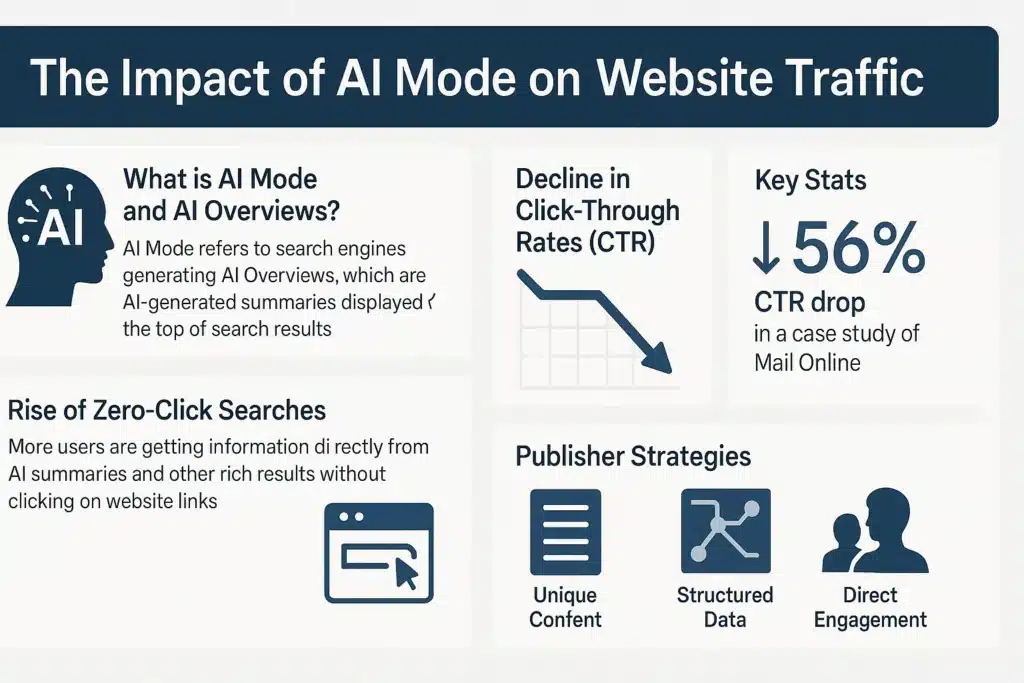
Google’s AI Mode, powered by its Gemini 2.5 model, offers users conversational, synthesized answers to their queries, reducing the need to click through to external websites.Similarly, AI Overviews provide summarized responses at the top of search results, often answering users’ questions directly within the search page.While these features enhance user experience by delivering quick answers, they pose challenges for publishers relying on organic traffic.
The Decline in Click-Through Rates
The integration of AI-generated summaries has led to a noticeable decline in click-through rates (CTR) for publishers.For instance, Mail Online reported a 56% drop in CTR when AI Overviews appeared for their top-ranking keywords . This trend indicates that users are increasingly obtaining the information they need directly from the search page, bypassing the need to visit the source websites.
The Rise of Zero-Click Searches
The phenomenon of zero-click searches, where users find answers without clicking on any search results, is on the rise.AI Overviews and AI Mode contribute significantly to this trend by providing immediate answers.This shift challenges the traditional SEO strategies that focus on driving traffic through high-ranking search listings
Strategies for Publishers to Adapt
1. Focus on Unique, In-Depth Content
Creating content that offers unique insights, in-depth analysis, and expert opinions can set publishers apart.Such content is less likely to be fully captured by AI summaries, encouraging users to click through for comprehensive information.
2. Optimize for Branded and Navigational Queries
Branded searches, where users look for specific websites or brands, tend to have higher CTRs even with AI Overviews present.Publishers should optimize their content to strengthen brand recognition and encourage direct searches.
3. Leverage Alternative Traffic Channels
Diversifying traffic sources can mitigate the impact of reduced organic search traffic.Utilizing social media platforms, email newsletters, and direct engagement can help maintain audience reach.
4. Implement Structured Data and Schema Markup
Using structured data and schema markup can enhance content visibility in search results.This practice can improve the chances of content being featured in rich snippets or other prominent search result features.
5. Monitor and Analyze Traffic Patterns
Regularly analyzing website traffic can help publishers understand the impact of AI features on their audience.Tools like Google Analytics and Search Console can provide insights into user behavior and traffic sources.
The Importance of Direct Engagement
Building a loyal audience through direct engagement channels is becoming increasingly vital.Encouraging users to subscribe to newsletters, follow on social media, or participate in community forums can foster a dedicated user base less reliant on search engine traffic.
Conclusion
The integration of AI into search engines presents both challenges and opportunities for publishers.While features like AI Mode and AI Overviews can reduce traditional website traffic, they also push publishers to innovate and adapt.By focusing on unique content, diversifying traffic sources, and engaging directly with audiences, publishers can navigate this new landscape effectively.
FAQs
1. What is AI Mode in Google Search?
AI Mode is a feature powered by Google’s advanced AI models that delivers summarized answers directly in search results, reducing the need for users to click on external links.
2. How does AI Mode affect website traffic?
AI Mode can lower website traffic by providing users with instant answers, which leads to fewer clicks on search result links, especially for informational queries.
3. What are AI Overviews and how do they work?
AI Overviews are brief summaries shown at the top of search results. They use AI to compile key information from multiple sources, reducing click-through rates to original content.
4. How can publishers maintain traffic despite AI features?
Publishers can maintain traffic by creating in-depth, unique content, optimizing for branded queries, leveraging social and email channels, and using structured data.
5. Will AI completely replace the need for visiting websites?
No. While AI provides quick answers, detailed content, expert opinions, and unique value still require users to visit the original source, keeping quality content in demand.
I’m Devyansh Tripathi, an SEO strategist and digital growth expert, helps businesses and individuals rank higher and drive organic traffic. Through DevTripathi., he shares cutting-edge SEO insights, content strategies, and marketing hacks. Passionate about digital success, he’s on a mission to make SEO simple, effective, and result-driven!