Optimizing for AI Mode: New SEO Strategies in the Age of Generative Search
25 May 2025
Optimizing for AI Mode: New SEO Strategies in the Age of Generative Search
The digital search landscape is undergoing a seismic shift. With the advent of AI-driven search engines like Google’s AI Overviews, traditional SEO tactics are no longer sufficient. To maintain visibility and relevance, businesses must adapt to these changes by implementing new strategies that cater to generative search technologies.
Understanding AI Mode and Its Impact on Search
Google’s AI Mode represents a significant evolution in search technology.Unlike traditional search engines that provide a list of links, AI Mode delivers synthesized answers directly within the search results, reducing the need for users to click through to individual websites.This shift necessitates a reevaluation of SEO strategies to ensure content remains discoverable and authoritative.
Introducing Generative Engine Optimization (GEO)
Generative Engine Optimization (GEO) is the practice of optimizing content specifically for AI-driven search engines.Unlike traditional SEO, which focuses on keyword placement and backlinks, GEO emphasizes creating content that AI models can easily interpret and include in their synthesized responses.Key aspects of GEO include:
Conversational Content:Crafting content that mirrors natural language, making it more accessible to AI algorithms.
Structured Data:Implementing schema markup to provide context and enhance content visibility.
Comprehensive Coverage:Ensuring content thoroughly addresses topics to meet diverse user intents.
Strategies for Optimizing Content in the AI Era
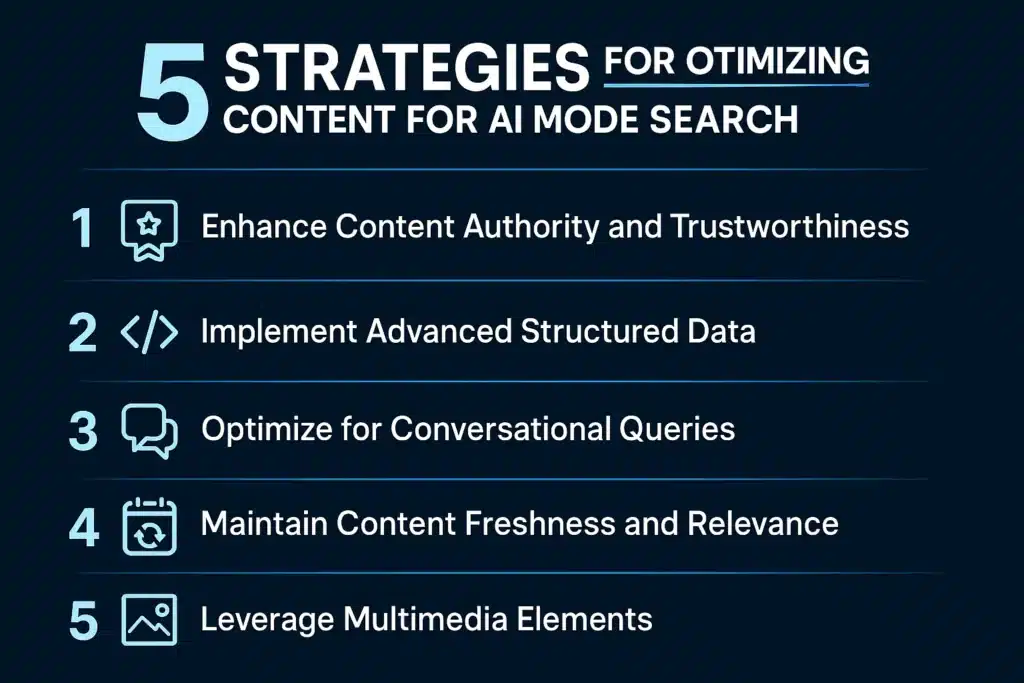
1. Enhance Content Authority and Trustworthiness
AI algorithms prioritize content from sources that demonstrate expertise and reliability.To establish authority:Business Insider
E-E-A-T Framework:Focus on Experience, Expertise, Authoritativeness, and Trustworthiness in content creation.
Cite Credible Sources:Reference reputable studies and data to bolster content credibility.
2. Implement Advanced Structured Data
Structured data aids AI in understanding and categorizing content effectively.Utilize schema markup to delineate content structure, enhancing the likelihood of being featured in AI-generated summaries.
3. Optimize for Conversational Queries
AI Mode often handles complex, conversational queries.Incorporate Natural Language Processing (NLP) techniques and target long-tail keywords that reflect natural speech patterns to align content with user search intent.
4. Maintain Content Freshness and Relevance
Regularly updated content signals to AI algorithms that information is current and reliable.Conduct periodic content audits and integrate current events or emerging trends relevant to your niche.
5. Leverage Multimedia Elements
Incorporating various media types can enhance user engagement and content richness.Utilize videos and infographics to explain complex concepts succinctly, and ensure all images have descriptive alt text to aid AI comprehension.
Technical SEO Considerations for AI Mode
Technical aspects of your website play a crucial role in AI-driven search optimization.Ensure your website is responsive and functions seamlessly across devices, optimize loading times to enhance user experience, and implement HTTPS to secure user data and signal trustworthiness to AI algorithms.
Monitoring and Adapting to AI Search Trends
Staying abreast of AI search developments is vital for sustained visibility.Utilize analytics tools to monitor performance metrics, gather insights from user interactions to refine content strategies, and engage with industry publications and forums to stay informed about AI search advancements.
Conclusion
The integration of AI into search engines signifies a transformative phase in digital marketing.By embracing strategies tailored for AI Mode, such as Generative Engine Optimization, businesses can enhance their online visibility and remain competitive in this dynamic environment.Continuous adaptation and a commitment to providing authoritative, user-centric content will be the cornerstones of success in the age of AI-driven search.
I’m Devyansh Tripathi, an SEO strategist and digital growth expert, helps businesses and individuals rank higher and drive organic traffic. Through DevTripathi., he shares cutting-edge SEO insights, content strategies, and marketing hacks. Passionate about digital success, he’s on a mission to make SEO simple, effective, and result-driven!