
Personalization in AI Mode: Tailoring Content for Enhanced User Engagement
29 May 2025
Personalization in AI Mode: Tailoring Content for Enhanced User Engagement
In today’s digital landscape, users expect content that resonates with their individual preferences and behaviors. Artificial Intelligence (AI) has revolutionized the way businesses approach personalization, enabling the delivery of tailored experiences that drive engagement and loyalty. This article explores how AI-powered personalization enhances user engagement and offers strategies to implement it effectively.
Understanding AI-Driven Personalization
AI-driven personalization involves leveraging machine learning algorithms and data analytics to deliver content, recommendations, and experiences tailored to individual users. By analyzing user behavior, preferences, and interactions, AI systems can predict and present the most relevant content to each user. This approach not only improves user satisfaction but also boosts key performance metrics such as time on site and conversion rates.
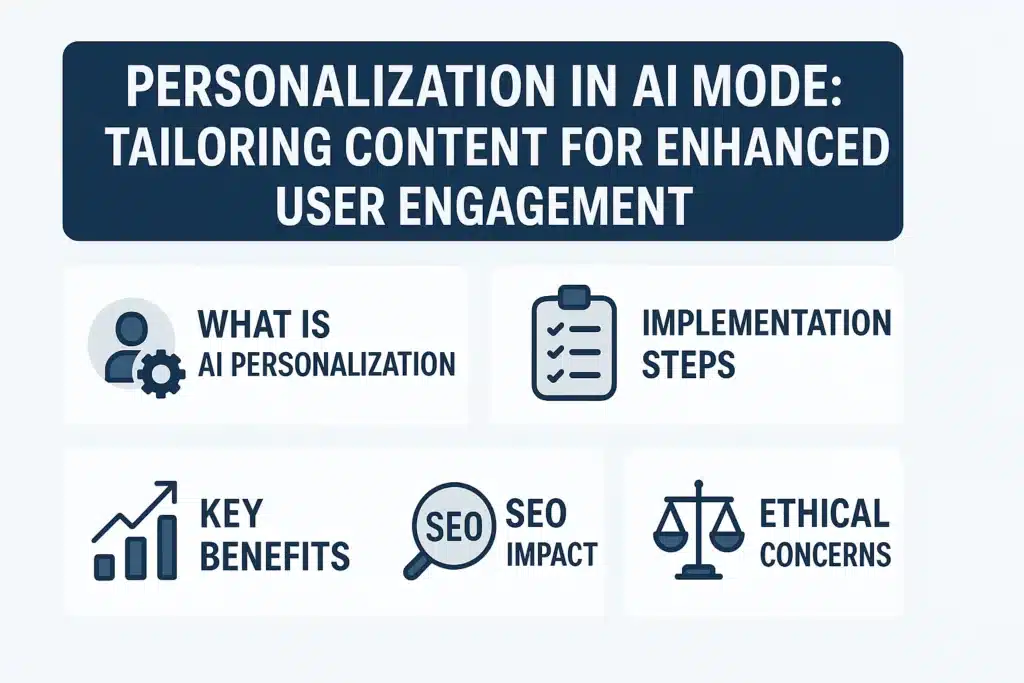
Benefits of AI Personalization
Enhanced User Engagement
Personalized content captures user attention more effectively than generic messages. By presenting users with content that aligns with their interests and behaviors, businesses can increase click-through rates and reduce bounce rates.
Improved Customer Retention
Tailored experiences foster a sense of connection between the user and the brand. When users feel understood and valued, they are more likely to return, leading to higher customer retention rates.
Increased Conversion Rates
By delivering relevant content and product recommendations, AI personalization can guide users through the sales funnel more efficiently, resulting in higher conversion rates.
Implementing AI Personalization Strategies
Data Collection and Analysis
Effective personalization starts with collecting and analyzing user data. This includes tracking user behavior on your website, such as pages visited, time spent on each page, and interaction with content. Tools like Google Analytics and CRM systems can provide valuable insights into user preferences.Marshmallow Challenge
Segmentation and Targeting
Once data is collected, segment your audience based on shared characteristics or behaviors. This allows for the creation of targeted content that addresses the specific needs and interests of each segment.
Dynamic Content Delivery
Utilize AI algorithms to deliver dynamic content that adapts in real-time to user interactions. For example, e-commerce websites can showcase products based on a user’s browsing history, while content platforms can recommend articles similar to those previously read.
Continuous Optimization
AI systems learn and improve over time. Regularly monitor the performance of personalized content and adjust strategies based on user feedback and engagement metrics
SEO Considerations for Personalized Content
Keyword Optimization
Ensure that personalized content includes relevant keywords that align with user search intent. This enhances the visibility of your content in search engine results.
Meta Tags and Descriptions
Customize meta titles and descriptions to reflect the personalized nature of the content. This can improve click-through rates by signaling relevance to the user’s query.
Structured Data Implementation
Implement structured data markup to help search engines understand the context of your content. This can enhance the appearance of your listings in search results through rich snippets.
Mobile Optimization
With a significant number of users accessing content via mobile devices, ensure that personalized experiences are optimized for mobile platforms. This includes responsive design and fast loading times.
Real-World Applications of AI Personalization
E-commerce
Retailers use AI to recommend products based on user browsing and purchase history, increasing the likelihood of additional sales.
Content Platforms
News and media websites employ AI to suggest articles that match a user’s reading habits, enhancing user engagement and time on site.
Email Marketing
Personalized email campaigns that consider user behavior and preferences achieve higher open and click-through rates compared to generic emails.
Ethical Considerations
While AI personalization offers numerous benefits, it’s essential to address ethical concerns:
Data Privacy: Ensure compliance with data protection regulations and be transparent about data collection practices.
Bias Mitigation: Regularly audit AI algorithms to prevent the reinforcement of existing biases in content delivery.
User Consent: Obtain explicit consent from users before collecting and utilizing their data for personalization purposes.
Conclusion
AI-driven personalization is transforming the digital landscape by delivering tailored experiences that resonate with individual users. By implementing effective personalization strategies and considering SEO best practices, businesses can enhance user engagement, improve customer retention, and drive conversions. As AI technology continues to evolve, staying abreast of ethical considerations and user expectations will be crucial in leveraging personalization to its fullest potential.
FAQs
Q1: What is AI personalization in content marketing?
AI personalization in content marketing involves using artificial intelligence and machine learning to analyze user data, preferences, and behavior. This enables marketers to deliver tailored content experiences that are highly relevant, increasing user engagement, satisfaction, and the overall effectiveness of marketing efforts.
Q2: How does AI increase user engagement?
AI increases user engagement by analyzing behavioral patterns, preferences, and interaction history. It then serves personalized content, product recommendations, or user journeys that resonate more with individuals, encouraging longer visits, repeated interactions, and a stronger connection between the user and the brand or platform.
Q3: What are the benefits of content personalization?
Content personalization enhances the user experience by delivering relevant information tailored to individual interests. This leads to higher engagement, better retention rates, increased conversions, and stronger brand loyalty. It also helps businesses stand out by offering value and relevance over generic content strategies.
Q4: Is AI personalization good for SEO?
Yes, AI personalization is beneficial for SEO when implemented strategically. Personalized content that includes targeted keywords, relevant metadata, and structured data improves search engine rankings, user engagement, and click-through rates. It also ensures content meets user intent, which search engines prioritize highly.
Q5: What industries use AI for personalization?
Many industries leverage AI for personalization, including e-commerce, media, finance, healthcare, and digital marketing. These sectors use AI to tailor user experiences—from personalized shopping recommendations to curated content feeds—improving customer satisfaction and driving business growth through data-driven, adaptive strategies.

I’m Devyansh Tripathi, an SEO strategist and digital growth expert, helps businesses and individuals rank higher and drive organic traffic. Through DevTripathi., he shares cutting-edge SEO insights, content strategies, and marketing hacks. Passionate about digital success, he’s on a mission to make SEO simple, effective, and result-driven!
Recent Posts
- Google December 2025 Core Update: Complete Analysis, Ranking Impact, and SEO Strategy
- Understanding AI Mode Analytics: Measuring Success in a Generative Search Landscape
- Personalization in AI Mode: Tailoring Content for Enhanced User Engagement
- AI Mode vs Traditional Search: Comparing User Experiences and SEO Outcomes
- The Impact of AI Mode on Website Traffic: What Publishers Need to Know
Categories
Latest News
- Google December 2025 Core Update: Complete Analysis, Ranking Impact, and SEO Strategy
- Understanding AI Mode Analytics: Measuring Success in a Generative Search Landscape
- Personalization in AI Mode: Tailoring Content for Enhanced User Engagement
- AI Mode vs Traditional Search: Comparing User Experiences and SEO Outcomes
Text Widget
Empowering brands with insights, strategies, and stories that drive digital growth.