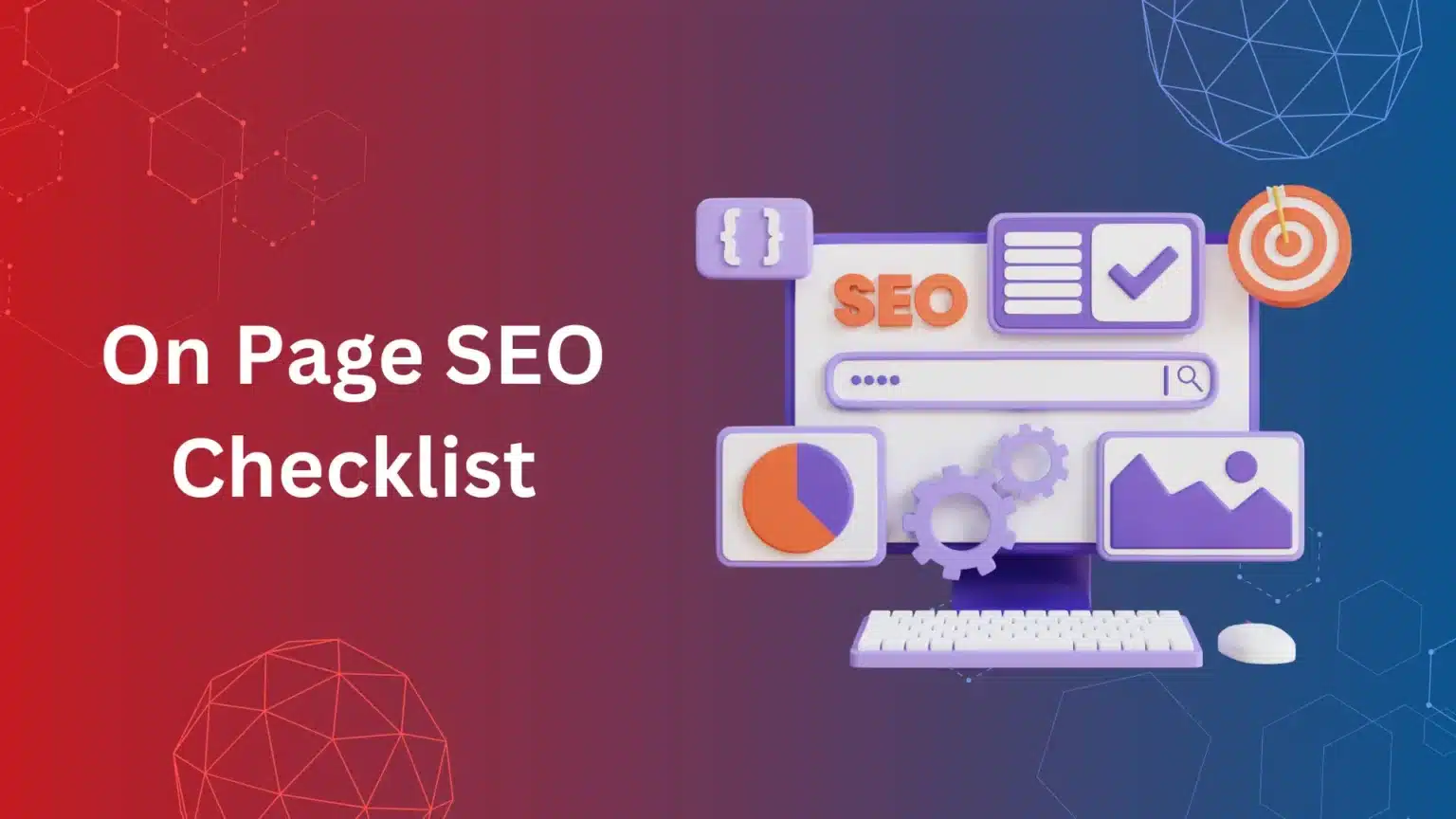
The Ultimate On-Page SEO Checklist for 2025
28 January 2025
In the fast-paced digital world, on-page SEO is the backbone of a strong online presence. It ensures that your content is optimized not only for search engines but also for your users. At Futuristic Coding Academy, we aim to equip you with actionable insights to help you rank higher on Google and deliver an unparalleled user experience.
This in-depth guide covers every aspect of on-page SEO, designed to help your blog rank in the top 3 of Google search results.
What is On-Page SEO?
On-page SEO involves optimizing individual web pages to rank higher in search engines and earn more relevant traffic. It encompasses a wide array of factors, including content quality, meta tags, internal links, and user experience.
Why is On-Page SEO Essential in 2025?
Search engines now prioritize:
- User intent: Understanding what users are searching for.
- Content relevance: Delivering answers that satisfy search queries.
- Experience metrics: Faster, more accessible, and user-friendly websites.
Stat: Studies show that pages optimized for on-page SEO experience a 40% higher click-through rate than non-optimized ones
A Step-by-Step On-Page SEO Checklist
1. Optimize Your Title Tags
The title tag is the first thing users notice in search results. A compelling title can significantly boost your click-through rate (CTR).
How to Optimize:
- Include the primary keyword at the beginning.
- Keep it under 60 characters to avoid truncation.
- Ensure it’s unique and reflects the page’s content.
Example: “The Ultimate On-Page SEO Checklist for 2025 – Proven Strategies”
2. Write Engaging Meta Descriptions
Meta descriptions summarize your content in 150–160 characters. They don’t directly impact rankings but can boost your CTR.
Crafting a Killer Meta Description:
- Summarize the content and highlight its value.
- Use action verbs like “Learn,” “Discover,” or “Find out.”
- Include your primary keyword.
Pro Tip: Use tools like Yoast SEO to preview and optimize your meta descriptions.
3. Use Header Tags to Structure Content
Headers (H1, H2, H3, H4) improve readability and help search engines understand your content hierarchy.
Best Practices:
- Use H1 for your main title.
- Break sections with H2 tags and use H3/H4 for subtopics.
- Incorporate relevant keywords naturally in your headers.
Example:
- H2: “Essential On-Page SEO Strategies”
- H3: “Why Keyword Placement Matters”
4. Optimize URLs
A clean and concise URL improves user experience and is favored by search engines.
Tips for SEO-Friendly URLs:
- Include your primary keyword (e.g., /on-page-seo-checklist).
- Avoid special characters, unnecessary words, or numbers.
- Use hyphens to separate words for readability.
Example: https://futuristiccodingacademy.com/on-page-seo-checklist
5. Create High-Quality, User-Focused Content
Google prioritizes content that satisfies user queries. Deliver value by addressing pain points with original and engaging content.
How to Create Effective Content:
- Focus on user intent: Why is the user searching for this?
- Use simple language and break text into smaller paragraphs.
- Incorporate stats, case studies, and actionable tips.
Stat: Articles with at least one image and a video are 53% more likely to appear on the first page (source).
6. Internal Linking Strategy
Internal links keep users engaged and signal to search engines how your content is interconnected.
Best Practices:
- Link to 2–3 related posts within your website.
- Use descriptive anchor text with keywords.
- Avoid overlinking to the same page repeatedly.
Check out our SEO Tools Guide for more insights.
7. Optimize Images for SEO
Images enhance user engagement but must be optimized to avoid slowing down your site.
Image Optimization Tips:
- Use descriptive file names (e.g., on-page-seo.jpg).
- Add alt text with relevant keywords.
- Compress images using tools like TinyPNG.
8. Enhance Mobile Friendliness
With Google’s mobile-first indexing, your site must provide a seamless experience on smaller screens.
How to Optimize:
- Use responsive design.
- Test your website with Google’s Mobile-Friendly Test.
- Ensure buttons and links are easy to tap.
9. Improve Page Load Speed
A faster website not only improves rankings but also reduces bounce rates.
Speed Optimization Tips:
- Compress images and minify CSS/JavaScript.
- Leverage browser caching and CDNs.
- Monitor speed with tools like PageSpeed Insights.
10. Leverage Schema Markup
Schema markup helps search engines understand your content better, enabling rich snippets in search results.
Steps:
- Add schema for reviews, FAQs, and products.
- Use Google’s Structured Data Markup Helper.
Example: Implement FAQ schema to appear in “People Also Ask” sections.
Common On-Page SEO Mistakes to Avoid
- Keyword stuffing: Overusing keywords leads to penalties.
- Duplicate content: Confuses search engines and lowers rankings.
- Ignoring analytics: Monitor performance to adjust strategies.
In the dynamic world of digital marketing, staying ahead requires a proactive approach to optimization. This on-page SEO checklist for 2025 equips you with actionable strategies to improve your website’s visibility, engage users, and achieve higher rankings on search engines.
From crafting compelling meta titles to leveraging structured data, every element of on-page SEO plays a crucial role in shaping your online success. Remember, the key is to focus on user intent, provide value, and stay updated with the latest SEO trends.
By implementing these tips, you’ll not only enhance your site’s performance but also create a better experience for your audience. As I continue to share insights on SEO and web development,
Have questions or feedback? Feel free to connect with me—I’d love to hear your thoughts.
FAQs
1. What’s the difference between on-page and off-page SEO? On-page SEO focuses on optimizing your website’s content and structure, while off-page SEO deals with external factors like backlinks.
2. How often should I update my content? Regular updates (every 6–12 months) keep your content relevant and improve rankings.

Devyansh Tripathi
I’m Devyansh Tripathi, an SEO strategist and digital growth expert, helps businesses and individuals rank higher and drive organic traffic. Through DevTripathi., he shares cutting-edge SEO insights, content strategies, and marketing hacks. Passionate about digital success, he’s on a mission to make SEO simple, effective, and result-driven!
Posts
- What Google’s New AI Search Documentation Means for SEO Teams
- Google I/O 2026 Search: AI Agents, Gemini 3.5 and the Unified Box
- Google’s AI Optimization Guide: The Technical and Content Checklist
- July 2026 SEO Update: AI Overviews, llms.txt and Search Console
- Prompt Optimization Beyond Page One: The Position-21 Citation Opportunity
Categories
- AI Citation Optimization
- AI Search Optimization (AISEO)
- AI Visibility Tracking
- Answer Engine Optimization (AEO)
- Brand Authority SEO
- Brand SERP Optimization
- Community Signal SEO
- Conversational Search Optimization
- Generative Engine Optimization (GEO)
- Knowledge Graph Optimization
- Modern SEO Strategies
- Multimodal Search Optimization
- Prompt Optimization
- SEO Trends
- Social Search Optimization
- Topical Authority SEO
- Uncategorized
- Video Search SEO
- Visual Search Optimization
- Voice Engine Optimization (VEO)
- Zero Click Search Optimization
Latest News
Text Widget
Empowering brands with insights, strategies, and stories that drive digital growth.